Author Interview: Katherine Brown

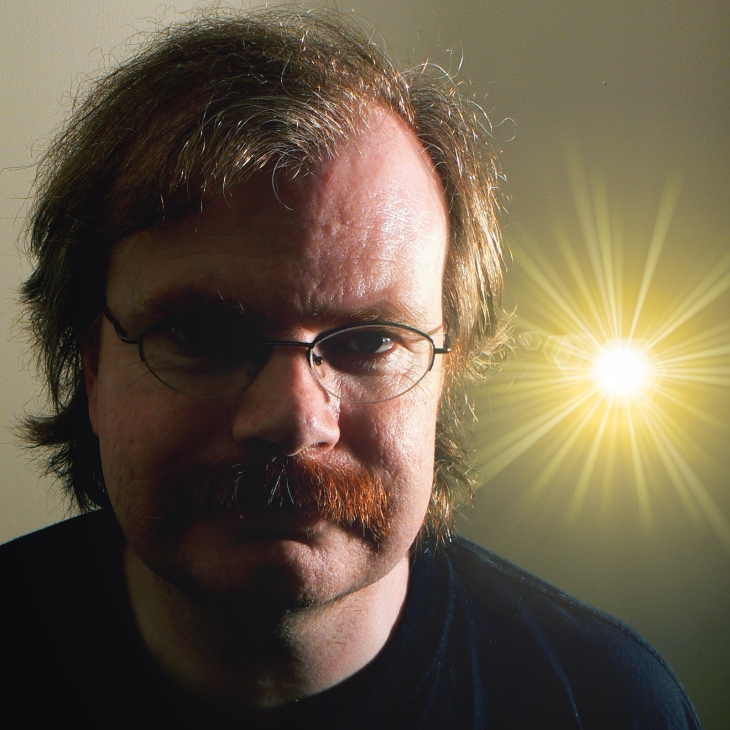
Katherineauthor photo

  1. Tell us a little bit about yourself.

Hello! Thanks for chatting with me. My name is Katherine Brown and I live in Texas – have my whole life. I am married to an amazing man and have a beautiful, kind stepdaughter who lives with us full time. I love to read. Truly, I have shelves of books, boxes of books, kindles running out of space for books, all of it! I also love to write, I enjoy words and find immense pleasure in weaving them together in a way to create something beautiful or funny or clever.

  1. What is the title of your current work (WIP or recently published). and what is its genre?

My current work is getting ready to publish very soon. Titled “Third Grade’s Terrible Trip,” it is the fourth book in a children’s series called School is Scary. The books are a mixture of humor and mystery and are geared for early chapter book readers. The series does advance a little as the characters grow up each year in school as well.

  1. Is this book suitable for children, or is it adults-only? If there’s mature content, what type of mature content does the book contain?

Absolutely appropriate for children, age 8 to 10-year-olds have really loved the series and I gave two kiddos a chance to be my beta readers for this work and they cracked up at several parts and want to know when the next book is coming.

  1. What inspired you to write this work?

The series, School is Scary, I actually began writing with friends on my bedroom floor as a pre-teen. As noted, I loved to read but I also always had a strong desire to write and create my own stories.

This particular book in the series was inspired by the many field trips to the zoo our school went on – I reimagined them with all the things that could go “wrong” to make a fun trip a hugely memorable trip for a child.

  1. What makes this book special, unique, or interesting? How does it “stand out”?

I think this book stands out in that it is able to take an unlikely group of friends, put them in a somewhat scary situation, and allow the reader to join with them on the journey as they work together to find their way alone through the zoo. There is even a map for the reader in the book that is replicating the map used by the characters for a visual aide to draw readers deeper into the story.

  1. Tell us some key information about the main character(s), both protagonists and antagonists.

The main protagonist is Bailey, an enthusiastic third grader that we met in book 1 of the series Kindergarten Teachers are Witches. Bailey was not optimistic about school in that first book but made a best friend Harmony who is still with her in Third Grade’s Terrible Trip and began to enjoy it a little more. Bailey also befriended a boy, Clay, in the last book who is a bit of a trouble-maker. You can see where his stubborn side and Bailey’s loyalty to friends lead them into some sticky situations.

Antagonists for this book are mainly the weather which really dampens the spirit of the kids on the field trip and an unknown voice that I can’t give away the identity of….just know it provides quite a fright several times throughout the story.

  1. What is your back cover blurb? Or if you don’t have one yet, how would you pitch your work in 200 words or less?

Still working on a blurb, so here we go for a pitch:

Finally, their first field trip ever! Bailey and friends couldn’t be more excited – well most of them, Liza is unhappy as always. A delay to their destination, then sudden storms, what else could go wrong with this trip? Turns out, quite a bit. Stalked by a creepy voice, separated and soaking wet, the friends seem to be disappointed at every turn. Will they ever make it out of the zoo? Find your map inside and journey along with them through all of the animal exhibits to see what happens.

  1. Share a tempting bit of the plot with us. Is there a particular scene that you’re really excited about? Why does it excite you?

I really love the homework assignment the teacher gives the class about the zoo when they are too distracted by the field trip. It gave me the opportunity to write a few mini-stories inside of the whole story.

  1. Share up to 800 words of your current work with us (with an intro of up to 200 words to establish context).


Below is a short excerpt from chapter one:

When several weeks after school started Mrs. Green passed out field trip notes to go in their Thursday Folders, folders the teachers sent home for parents to review and sign each Thursday, Bailey and several other students let out squeals of delight and whoops of joy. There had been no field trips before this year and everyone burst with excitement to finally go on their first one. Well, almost everyone.

“The zoo!” Liza grumbled. “Who wants to go to the smelly, old zoo?”

Theo nodded, “They won’t even let you pet the lions or ride the zebras,” he said unhappily. He continued drawing on the back of his homework, the picture had started as Captain America with his shield but now it looked like Captain America battled a lion, too.

Bailey just shook her head. Some people it seemed could complain about anything. She for one couldn’t wait for a whole day out of school with her friends. And so as soon as the bus dropped her off at home after school that day Bailey had run in to tell her parents the great news.


  1. What is the easiest part of writing for you? And what is the hardest?


Writing the story itself is easiest for me. I do get stuck for a day or two waiting on an idea or deciding a direction (no, I don’t plot too much in advance) but once I know where my characters need to go the words flow quite easily. The difficult part for me is turning off my “inner editor” and simply getting all the good stuff out. I typically stop and make corrections along the way, taking up sometimes valuable and scarce writing time that can cost me a thought or idea that doesn’t get fleshed out properly.

  1. Finally, if you could offer some advice to up-and-coming writers, what would that advice be?


Write!!! I put it off for a long time as “not a serious / realistic job” and I regret that.

Also, find a community of writers to encourage, share with and be encouraged by – it can make an enormous difference in the quality and quantity of your writing in my opinion.


BONUS INFORMATION


Your FB page:
 https://www.facebook.com/katherine-Brown-Katie-Author-1007999836006370

Your Twitter link:

Your WordPress (or other) blog: www.katherinebrownbooks.com

Your online book purchasing link(s): 

 The link to the first three books in the series – https://www.amazon.com/School-Scary-3-Book/dp/B079G31DYP/ref=sr_1_5?ie=UTF8&qid=1536598667&sr=8-5&keywords=school+is+scary+katherine+brown

Paperback of book 1 & 2: https://www.amazon.com/School-Scary-Book-Katherine-Brown-ebook/dp/B07BNTRL6H/ref=sr_1_5?ie=UTF8&qid=1536598721&sr=8-5&keywords=school+is+scary

Katherine Cover School is Scary Book 4

The Introduction, the Dedication, and the Acknowledgements: Are they necessary? And where, oh where do you put them?

This topic came up recently on a fiction writer’s FB group. Introduction, Dedication, Acknowledgements — three segments of a book which stand apart from the narrative. So why put them into a novel in the first place?

In “The Codex of Desire” I included both a Dedication and Acknowledgements. Why?

The Dedication was pure self-indulgence: I wanted to mention my husband (still alive) and my mother (deceased), as two individuals who deserve praise and, well, dedication. My husband is a Big Name Canadian comic artist, so his name has appeared in print many times; my mother was a library technician who, so far as I know, has never had her name mentioned in a published work, and I thought that being included in my first novel would have pleased her, were she still alive. (And if there is an afterlife, perhaps it does please her even now.)

The Acknowledgements, on the other hand, were a matter of necessity. I had beta readers to thank, and other people who contributed in a concrete sense to the creation of “Codex”. It’s only fair that they have their moment in the spotlight, since it’s a rare novel that gets written without significant help from one’s friends and wider community.

The Dedication was placed immediately after the title page, in its traditional position. The Acknowledgements, on the other hand, were positioned at the very end of the book; only the Author Bio was placed after them. Why the Acknowledgements in that location, as opposed to at the start of the book where some writers put it?

Quite simply, I felt that my readers would have more appreciation for the Acknowledgements AFTER they’d read the entire book, when they could see what the folks I’m crediting are responsible for (the novel itself). Also, it seemed to me that Acknowledgements at the very front of the document only delay the reader getting into the narrative, so… yep, to the end of the MS they went.

And why not an Introduction? What on Earth would I put into it? “This is a book about dinosaurs. They lived a very long time ago, and are now extinct.” Nothing that everybody doesn’t already know. And again, it would only serve to delay reader engagement with the narrative — plus, “Codex” is not a novel which requires particularly specialized knowledge to appreciate, and (in my opinion) an Introduction is the place where you share such specialized knowledge with your readership. So an Introduction was never on the table, at least for this novel.

Now, if I do ever write that sequel to “Codex” that I’ve got in mind… THEN an Introduction may be appropriate, to recap the events of the first novel and prep the readers for the new story I’ll be telling.

But I’ll still put my Acknowledgements at the end. 🙂

Previews of articles to come :)

Chronic pain is taking a huge bite out of my energy levels at the moment, so I’m going to use today’s post to give y’all a preview of articles that I have in the works.

In no particular order…

1) “So… where do you get your ideas from, anyway?”

I think every writer runs into this question sooner or later, particularly if they are writing in the speculative fiction genres. This article will tackle my own personal approach to finding and cultivating innovative ideas.

2) My favourite robots, and why I love them SO VERY MUCH!

Based on a panel I ran at Keycon a couple of years ago. The answers may surprise you!

3) The results of a character creation 5-day workshop through the “For Fiction Writers: Writing Into the Woods” Facebook group

What I learned, how this course pulled Jeremy Anderson (the male main character for “Where Darkness Falls”) into much sharper focus for me — and why you should check out the workshop videos too.

4) The history of novels: “Sensation fiction” and beyond!

To complain about modern novels “shocking for the sake of shock” (as one poster recently did on a FB writers group) is to ignore the long pedigree of the novel as a vehicle for thrills, the melodramatic, the fantastical, and the gruesome. Come with me on a trip down memory lane, to the genesis of the modern novel!

5) “Write what you know”: The best practical advice ever, or the kiss of death?

Well, it kind of depends on your definition of “know”…

6) So, which is harder: writing the book, or editing the book?

Two insanely steep slopes, compared and contrasted.

7) “Where Darkness Falls” and Wicca: What I know, how I know it, and how I’m changing it for “WDF”

My religion, my individual take, my bending of the rules.

8) “Where Darkness Falls” and the Southern Baptist denomination: What I (think) I know, how I know it, and why writing about it scares the living wits out of me

NOT my religion, my individual take, and how much do I dare to bend the rules as I perceive them?

9) The great DragonCon carpet cosplay debacle

If you haven’t heard of this… you should!

10) My day at a furry con — will I ever go back?

Short answer: Yes. Longer answer: HELL yes!

And many more subjects are to come, so please stay tuned! 🙂

(Including whether or not being Canadian is the kiss of death in the American market!)

Author Interview: A.M. Surtees

  1. Tell us a little bit about yourself.

Well, most importantly, I am a mother of five children aged between two and twelve. I am also a children’s photographer and a kitchen hand. I know right, where do I find time to write? The answer, I have no idea aha.

  1. What is the title of your current work (WIP or recently published). and what is its genre?

Currently I am working on the second book in a trilogy that is due for rapid release next month, no pressure. It is a crime thriller trilogy with the first book ‘Called to Kill’ due out on October tenth with book two due on October 17th and book three due on October 24th

  1. Is this book suitable for children, or is it adults-only? If there’s mature content, what type of mature content does the book contain?

The main character is a call girl who becomes a trained assassin. So, safe to say it’s not kid friendly.

  1. What inspired you to write this work?

As a kid, I was ridiculed for having a small waist and larger than average chest so I wanted to create a character who had all those same things but used it against people. I wanted her to be the kind of woman who men would lust after one minute and beg forgiveness from the next.

  1. What makes this book special, unique, or interesting? How does it “stand out”?

Tamikah’s struggles and resistance to love would speak to a lot of young women who have been through the same kind of childhood. It also breaks the barriers of the norm and you really get attached to these characters in ways that you wouldn’t necessarily from a run of the mill crime thriller.

  1. Tell us some key information about the main character(s), both protagonists and antagonists.

The main hero is Tamikah who after a troubled past, finds home on the streets, using her body to get enough money to eat until Jackson Craig takes her in, gives her a true home and teaches her how to become a force to be reckoned with. He teaches her to use her body to lure and use her skills to instill fear.

I can’t tell you the name of the bad guy because it would give the story away, but lets just say that they were considered a friend until their secret past starts to unravel throughout the trilogy and the gang starts to realise they were never really a friend.

  1. What is your back cover blurb? Or if you don’t have one yet, how would you pitch your work in 200 words or less?

To the world she was nothing more than a lady of the night, but to him she was so much more.

After fleeing from an abusive childhood, Tamikah found her home on the streets until the day Jackson came along and gave her a purpose: To bring justice to the unjust.

But, when the unjust threatens her home, she will have to turn every stone, rattle every cage and learn to trust an unexpected love interest in order to kill the threat before it kills her.

Join the gang in Called to Kill, book one in a nail biting trilogy that will leave you lusting after a book four.

  1. Share a tempting bit of the plot with us. Is there a particular scene that you’re really excited about? Why does it excite you?

I think my favourite scene is when they uncover the bad guy and after several leads in all sorts of directions come up dry, the revelation will have some readers screaming ‘I knew it’ and others scratching their heads because they didn’t see it coming.

  1. Share up to 800 words of your current work with us (with an intro of up to 200 words to establish context).


This is the first few paragraphs of book one…

Moaning with just the right combination of exhaustion and pleasure to be convincing, I massaged my pelvis against his, a sly smirk playing on my soft crimson lips as his back began slowly arching toward the ceiling, his breathe exhaling slow and deep. He was close to climax and I was close to the apple martini waiting downstairs.

Helping him along, I gripped his hands and caressed them upwards along my abdomen until they found contact with the black lace bra that softly cupped my breasts, a softness that didn’t last very long when he realised what he had in his grasp. I cant say it was overly pleasant as he squeezed in a manner that could have been compared to that of a stress ball during an intense interrogation but the sounds I made as I rolled my hips in a downward curve against him made his eyes light up with hungry pleasure.

Gently leaning forward and guiding his hands around to my rear, I tilted my pelvis upwards as I lowered my upper body until my chest came into contact with his hot and sweaty torso. Short, black hairs tickled against the exposed parts of my breast, the shorter hairs prickling against my flesh. This was definitely not the kind of body I would go for on a Saturday night at Bellatrix, but those guys don’t come with the same fringe benefits this one would be coming with, so long as I tolerated a few unsavoury moments here and there. Trust me, it’s worth it.

The closeness of my body against his own was enough to really trigger an intense reaction, his body quivering as he pulled my pelvis down against his own in one final thrust to help finish him off before he fell back into the cloudlike softness of the hotel suite pillows. Sliding my hands along his torso, I smiled to myself at the view before me. Here lay this mid-forties man with his head tilted back, eyes closed and an ear to ear grin brimming with pride at his feeling of great accomplishment. In all my years in this line of work, I’ve seen maybe two men who don’t behave like this when they release themselves. It’s what makes the next part of my job so easy.

As I leaned back, keeping close eye on him to ensure he still had his eyes closed and maintaining enough soft movement to ensure he knew nothing other than I was simply just further enjoying the feel of him, I slid my hand down my thigh to the rim of my black leather boots. If it wasn’t for the biker babe fantasy that was admired by so many men, I would never get away with wearing my boots for these things. Then Id have nowhere to hide my gun.

Reaching into the lining of the right boot, I retrieved the small dark metal grey 22 calibre handgun with ivory woodgrain handle, while simultaneously retrieving the matching dark metal grey silencer from the left boot. Bringing the two halves together seamlessly behind my back, I looked down at him as he remained in a state of blissful unawareness to the end that was about to come for him.

Slowly drawing my upper body down until my breasts gently caressed his torso once again, I placed my free hand against his cheek and offered a gentle kiss upon his lips, causing his eyes to open, his smile growing wider. A smile that faded quickly upon the sensation of the cool metal against his the inner curve of his squared jaw.

He eyed me with his emerald greens wide and pleading as a momentary awareness took over him, realising quickly that his lucky score was none so lucky after all. In the same moment he opened his mouth to speak, I squeezed down on the trigger, the silencer doing its job at keeping the sound of the blast minimal. As the bullet penetrated his mandible, I was overwhelmed with regret at not closing his mouth before engaging the trigger as blood and flesh matter erupted from his mouth, splattering down the front of us both.

After taking a moment to gather my bearings from the shock of the unexpected mess, I unscrewed the silencer, placed the two parts back into my boots and rose off him, trying to avoid spreading blood even further before grabbing my bag from the entry table where it was dropped in what he mistakenly assumed was the ‘throws of passion’. What can I say, you don’t get to where I am without being an extremely convincing actress.

  1. What is the easiest part of writing for you? And what is the hardest?

The easiest part is actually the story because I create my starting character and then they tell me their story. The hardest part is focusing on writing with five children running around.

  1. Finally, if you could offer some advice to up-and-coming writers, what would that advice be?

Don’t write what you think your audience will like. What what makes you happy. There will always be a market for it and there will always be someone who thinks it is terrible. There’s seven billion people in this world. Also, a bad review is an opportunity for improvement, not a reason to quit.

BONUS INFORMATION

Your FB page: facebook.com/amsurtees

Your Twitter link: twitter.com/amsurtees

Your WordPress (or other) blog: TBA

Your online book purchasing link(s): TBA

AUTHOR INTERVIEW: Simon Collis!

simon collis photo

LAUREN ALDER’S ELEVEN BOOK WRITING QUESTIONS, Answered By Simon Collis

  1. Tell us a little bit about yourself.

I was born in Yorkshire, England, in 1972. After a few odd jobs I’ve settled down into the software industry and have moved all over the country – I think I once worked out that I moved house over twenty-five times in my life so far. My most recent move was to Lisbon in Portugal where I now live with my fiancee, two dogs and nine cats.

  1. What is the title of your current work (WIP or recently published). and what is its genre?

My current work doesn’t really have a single genre, actually, but lots. I’m writing a short story a week for 2018 and publishing them on my website. I’ll then be compiling the stories into two volumes, with some light editing, the first one of which will be available later in the year.

Because they’re short stories, and also because I don’t want to repeat myself by writing the same story again and again, the genres are mixed: there’s some horror in there, some fantasy, some dystopian futurism, quite a bit of crime, and some even with a more “literary” bent.

I have set myself some ground rules though: no sexual serial killers, or locked room mysteries, or anything else that has become cliché through the endless parade of murder-of-the-week shows that television seems to specialise in these days.

  1. Is this book suitable for children, or is it adults-only? If there’s mature content, what type of mature content does the book contain?

I tend to write more for an adult market, but that said there’s almost no sex or romance in my work, simply because that’s areas I don’t feel I have the right writing tone to tackle. Plus in both cases I think you need to add space to the work rather than the more compact form that I’m working in at the moment.

In addition, the language I use is all “family-friendly” simply because I’m aware that I’m not good at swearing. That’s in real life, as well. So I’m careful to use that sort of language only when I absolutely have to, because otherwise I get into an infinite loop of editing it out because I feel it was inappropriate, putting it back because the paragraph now doesn’t read right, then taking it out again because it feels like I made the sentence even worse, then putting it back because I think I might have had it right the first time…

The subject matter, however, is not so family friendly: there’s been quite a few murders (although they mainly happen “off screen”), and some of the themes are quite adult.

  1. What inspired you to write this work?

For years I’ve had people saying that I should write more, write a novel, try and get published. I’ve never really had the confidence, or the portfolio, to do that, and then in December last year this idea came to me – write a story, every week, for a year, and publish them.

I’ve stuck to that so far and we’re in September now, with thirty-five stories out (and it will be 36 by the end of this weekend).

I don’t have a firm schedule but I try and publish the story on a Saturday. On a Wednesday, I do a “behind the scenes” piece, explaining a little bit about where the inspiration for the story came from, where I got some of the ideas from, and some of the rejected idea I used. I don’t know if anyone actually reads them, but I like to think of them like my “director’s commentary” for each one.

  1. What makes this book special, unique, or interesting? How does it “stand out”?

I guess mainly the challenge aspect is what stands out. Everything you read is specifically written for that week, so if you want to see a style evolving, you can do that. If you want to read something new and different every week, you can do that. You won’t know what you’re getting, how long it will be, whether there’s a happy or tragic ending, or even whether the characters from this week are going pop up again in a few weeks time.

I’m already planning the compilation books, and little will change about the stories, although I will reorder them to try and break things up a bit, so that two horrors don’t follow each other, and you don’t get two stories about the same characters together (unless they specifically follow on from each other).

  1. Tell us some key information about the main character(s), both protagonists and antagonists.

You would think that in a collection of short stories there aren’t any main characters that I could talk about, but I have a few recurring characters.

For a start, there’s Munro Elkwood, who owns an antiques shop. He tends to sell haunted and unpleasant things, and I’ve done a couple of stories where people have bought things from him and they have changed their life in some way – usually not for the better. The original story had him visiting an old man and claiming that he has eternal life: although whether that’s a genuine claim or whether he was trying to scare his assistant is something I intend to come back to before the end of the year.

Recently I introduced a character that has been in my head for years – she was actually the main character in a short story I wrote when I was fourteen, and she is a medium who really not only doesn’t believe in what she does, she actually thinks she is a fraud but goes along with it anyway because it’s all she knows how to do. There’s a whole backstory about her that I won’t go into, because we really don’t have the space here, but I do have some more plans that include her.

And finally there’s a journalist called Graeme, who is a music critic. He’s a minor character in “The March Society”, and the narrator in “Zero Nine”. I do have plans for him – I originally created him, and Estrella Raine, who is his girlfriend – for a story called “The Event” that I wrote about five years ago. I might include that story as a “bonus feature” in one of the collection volumes…

  1. What is your back cover blurb? Or if you don’t have one yet, how would you pitch your work in 200 words or less?

I have started work on a blurb for volume one, so here’s my work in progress. Please, be gentle:

<blockquote>What happens when you challenge yourself to write a short story ever week for a year?

A haunted antique shop, a self-doubting medium, the end of the world and a few murders – and that’s just the first six months.

Along the way you’ll meet a boy that can’t sleep without a monster in the cupboard, a wolf that changes into a man at the full moon, and even find out what the best-selling fantasy series is in a world full of centaurs, goblins, dwarfs and elves.

This collection brings together the first twenty-six short stories from the author’s “Year of Short Stories” challenge, covering a wide range of genres, and includes some previously unpublished bonus material.</blockquote>

  1. Share a tempting bit of the plot with us. Is there a particular scene that you’re really excited about? Why does it excite you?

It’s difficult to pick one. I’m particularly fond of a trilogy of stories that started with “If, Never”, because they all tell the story of the same murder from three different viewpoints, and in each case end with what is, hopefully, a surprise ending.

“Doctor Fog” also stands out. I’d had this idea in my head and had wanted to write this for a long time. It’s basically an inverted version of the “monsters in the wardrobe” trope, in that in this case, a paedophile comes to “say goodnight” to a little boy, and the monster comes out and eats the paedophile. It was particularly hard to handle, because I wanted to get the scene close enough that it was unequivocal what was about to happen, but not close enough to make the story really difficult to read. I ended up with a scene where the mother is saying to a psychiatrist – in the hearing of the boy – that he can’t go to sleep any more unless she says there’s a monster in the cupboard, and the bigger teeth it has, the better he sleeps. It felt like a good payoff for what was otherwise quite a dark story. 

  1. Share up to 800 words of your current work with us (with an intro of up to 200 words to establish context).


Here’s a scene from “Poppy And Zara”. The protagonist is worried that his wife and child are sick and he’s wanting to get home early from a conference, so he’s trying to check out of the hotel early. This is from fairly early on in the story, and at this point the protagonist is still trying to balance his diminishing level of empathy for strangers versus concern for his family:

<blockquote>I packed my things quickly, and headed down for breakfast. It was empty. There were no tablecloths set, no knives and forks, no buffet – nothing.

“Hello?” I asked. The empty air made no reply.

I walked over to reception and rang the bell.

A thin man – not the man who’d booked me in yesterday – came out of the back office. He was sweating badly.

“Can I help you?” he asked.

“No breakfast?”

He shook his head. “Most of the kitchen staff are sick, I’m afraid. There may be something open a little way up the highway.”

I nodded.

“May I apologise on behalf of the hotel,” he said, and leaned over to steady himself on the desk.

“I have an issue,” I said. “My daughter’s sick, so I need to check out early to get home. Is that OK?”

He nodded. “That will be fine.”

I handed over my key card and he placed it in the reader.

“I see here that will be -”

He suddenly bent double, and vomited, a substance that looked more blood than food, all over the desk and the computer. There was an electrical fizzing noise, a crack and a puff of smoke, and that seemed to be too much for the receptionist, who collapsed on the floor behind the counter.

I moved over to the side and looked over. He was curled in a foetal position, shivering.

“Are you OK?” I asked.

“I’ll be fine, sir.”

“What about my checking out?”

“We could just send you an invoice, sir, if that’s all right?”

“That’s fine,” I said, the bizarre nature of the conversation barely registering with me right now. “Can I get you anything? Or anyone?”

“I have an emergency pager on my belt,” he said. “I’ve pressed the button… someone will come.”

“OK.”

“You can leave, sir, it’s all right.”

“Are you sure? I mean…”

He closed his eyes. “Just leave me in peace,” he snapped.

“All right,” I said, and pulled back from the desk. I picked up my bag and headed out to the car park. Quite frankly, I didn’t want to catch whatever it was he had.</blockquote> 

  1. What is the easiest part of writing for you? And what is the hardest?


The easiest is allowing the words to flow, and letting them lead you. It’s dangerous, though, because you can always end up somewhere that you didn’t intend to go.

The hardest, really, is when I can’t get started. When I know where I want the story to get to, but the route that it needs to take to get there is difficult. I have many half-worked out plots sat in notebooks, ready for use, that are missing sections – like a jigsaw puzzle where you’ve lost a key piece. 

  1. Finally, if you could offer some advice to up-and-coming writers, what would that advice be?

I’m really still a beginner myself, so mainly my advice is to read and learn. Follow someone on Twitter or Facebook who is doing this – as many as you can – and read up how they did it. Read “The Curve” by Nicholas Lovell to understand how the model behind Patreon and Kickstarter works (The Curve was written in 2014, so very early on in this process).

Be your own sales and marketing: get on Facebook and Twitter, connect with your readers. Use Google Analytics on your website to see where people are coming from.

But most importantly – don’t give up. I can’t stress this enough: Do. Not. Give. Up. You might be tempted to, and giving up is really easy, but if you’re tempted, do what I do about making any life-changing decision (and I’ve made plenty of those over the years, as I’m sure everyone has): I ask myself, “how much more will I regret it more not doing this, than doing it?”. I’ve found that’s my best motivator of all.


BONUS INFORMATION


Your FB page:
 https://www.facebook.com/simoncollisauthor/

Your Twitter link:
 https://twitter.com/NomisSilloc

Your WordPress (or other) blog: https://www.simoncollis.com/

Your online book purchasing link(s): 

 Nothing as yet, everything (so far) is available free to read on https://www.simoncollis.com/.

Just For Fun! Wild Prairie Fur Con 2018 Pictures!

I’ll be sharing more about WPFC 2018 in a future post, but for today — let’s have some cool pictures! 🙂

Not-very-cool me, in the hotel restaurant, with my only fannish accessory for the weekend besides my Keycon t-shirt: a cute li’l crocheted alien on a headband.

WPFC Me With Alien Headdress Sat Lunch

Well, maybe not my ONLY fannish accessory… I commissioned a crow name badge from one of the artists in the Dealers Den. Crows are very precious birds to me for a number of reasons, including some spiritual ones, so I felt comfortable identifying with them during a furry event.

WPFC Crow Badge

Somebody’s getting their tail nommed on! OM NOM NOM!

WPFC Furries Dragon Nibble on Tail Sat Morning

LOVE the skeleton face! And the LED name tags!

WPFC Furries One With Skull Face Sat Morning

A charming female ferret. I ended up hanging out with her and her SO for most of Saturday evening — such nice folks!

WPFC Snow Fox Furry Cool Couple I Met Sat Morning

One of the coolest accessories I saw all day (privately I dubbed it “the Aslan backpack”, but I don’t know what the person wearing it called it).

WPFC Aslan Backpack Sat Afternoon

The Artist Guest of Honour. If she fits, she sits! 🙂

WPFC Artist GoH It Fis She Sits Sat Afternoon

One of the charming serving entities in The Maid Cafe on Saturday night: an angler fish fursona, complete with forehead light!

WPFC Angler Fish Furry Maid Cafe Sat Night

And finally, the fellow (SO to the charming ferret!) who won the Live Reading of “The Eye of Argon”! I asked him to “strike a Grignr pose”, and he happily obliged!

WPFC Eye of Argon Winner with Ring

A written account of the convention will follow in the next few days, but suffice it to say that as a non-furry who was nervous about being all alone in a crowd of unknown fans, I was made to feel immensely welcome! 🙂

Author Interview: Steven J. Pemberton!

Steven J Pemberton

LAUREN ALDER’S ELEVEN BOOK WRITING QUESTIONS, Answered By Steven J Pemberton

  1. Tell us a little bit about yourself.

I was born in England in 1970. At the time, my father was a librarian, and my mother was a teacher, so it was probably inevitable that I would grow up loving books. For most of my childhood, my family and I lived in New Zealand, returning to England in 1981. I graduated from the University of York in 1992 with a bachelor’s degree in computer science. I now live in Hertfordshire with my partner, where I work as a software developer.

2. What is the title of your current work (WIP or recently published). and what is its genre?

My most recent published novel is The Reluctant Dragonrider, book 2 in my Dragonrider series. As you can probably guess from the title, it’s fantasy.

  1. Is this book suitable for children, or is it adults-only? If there’s mature content, what type of mature content does the book contain?

It’s suitable for older children and adults. There’s a romance that turns sexual, but I “fade to black” before the sex scenes. A few characters get killed off gruesomely, but I try not to dwell on the gory details.

  1. What inspired you to write this work?

The Dragonrider series came into existence in a rather roundabout way. Many years ago, a member of a mailing list I was in (remember them?) had a quotation in her signature block, “Do not meddle in the affairs of dragons, for you are crunchy and taste good with ketchup.” (This, of course, is a riff on a quotation from Tolkien, “Do not meddle in the affairs of wizards, for they are subtle and quick to anger.”) I thought I might be able to get a story out of it. I wrote about 600 words of a man on a hilltop who’d just summoned a dragon and was trying to convince it to help him. After that, I got stuck, because I hadn’t yet learned to wait until I had a few of the story’s key scenes or turning points clear in my head before starting to write. Those 600 words languished on my hard drive while I wrote many more words and many more stories. As I was writing one of those stories (The Mirrors of Elangir), I mentioned in passing that one of the warring nations in it used dragons as airborne cavalry. I realised that if I took my 600-word beginning and set it in the same world as The Mirrors of Elangir (but many years later), I’d be able to continue the story. I now had a setting, some history, and (most importantly) some motivation for the dragon’s behaviour. That story became The Accidental Dragonrider, which is now the first book in the series.

I initially intended The Accidental Dragonrider to be a standalone book, and gave the ending a definite sense of finality. But I try not to close off options completely, and I left a few loose ends and unsolved puzzles to allow myself a sequel if I ever wanted to write one. Then it proved unexpectedly popular, and I decided I shouldwrite a sequel. (I swear this never occurred to me when I was writing, but it turns out there are a lot of people who like reading about dragons.)

  1. What makes this book special, unique, or interesting? How does it “stand out”?

I don’t think any one feature is unique, though I’d hope the overall combination hasn’t been done before – or not too often, anyway. (I often tell novice writers that if they think their idea is original, that just means they haven’t read enough to realise it isn’t.) I’m more concerned about craft than art – I’d rather tell a story that’s been told before and do it well than tell a new story and do it badly. That isn’t to say it’s impossible to do both, but I’m not arrogant enough to think I can.

One thing that’s fairly unusual (in my experience) for a fantasy with a teenage protagonist (Tiwan) is that both her parents are alive, and take an active part in the story. Her father is trying to prepare her for an important mission (see blurb below) but at the same time protect her from harm.

6. Tell us some key information about the main character(s), both protagonists and antagonists.

Tiwan, the protagonist, is the daughter of Iko, who was the protagonist of The Accidental Dragonrider. She’s one of the few people in this world who can speak to dragons. (Iko is the only other one in the story.) She’s brave, curious and resourceful, and will always try to do the right thing, even though it’s often not obvious what the right thing is. She’s seven when we first meet her, then we meet her again at ten, twelve and sixteen.

Iko, Tiwan’s father, used to be a teacher, and is the person who’s most knowledgeable about dragons. He wishes he could have nothing to do with them.

Revath, Tiwan’s childhood friend and later lover (spoilers!) mostly just wants to be a fisherman, but is caught up with the dragons through his love for Tiwan. He’s brave and strong but somewhat unimaginative.

Makhan is a bully who does his best to make Tiwan and Revath miserable when they’re all children. When he grows up, he joins the village’s police force. He tells everyone he’s protecting them from criminals in their midst. He might even believe it himself.

Athera is a dragon, one of their leaders, who has dealings with Iko in the early part of the book. Like almost all the dragons, he comes across as considering himself to be morally superior to humans and vastly more knowledgeable and wise than any of them. He’ll tell you as little as possible while acting surprised that you don’t already know more than he’s told you. He’s missing a foot, which is unusual for a dragon – they heal quickly and are almost impossible to kill.

Olahin is a younger dragon who seems to have been designated as their liaison for Tiwan. (She turns up whenever Tiwan summons a dragon. It’s not possible to summon a specific dragon – or if it is, Iko and Tiwan haven’t worked out how.) She’s a little more friendly than Athera, perhaps because she appreciates how important Tiwan’s mission is, or perhaps because she hasn’t had as long to build up a dislike of humans.

Vadim is another of the dragons’ leaders – not so much a villain as one who doesn’t believe the dragons need help from humans, and one who’s willing to resort to underhanded (or underclawed) methods to make sure it doesn’t happen.

  1. What is your back cover blurb? Or if you don’t have one yet, how would you pitch your work in 200 words or less?

It’s been forty years since Tiwan’s father Iko convinced a dragon to save their village. Now the dragons are back, and they want Tiwan’s help in a war against an enemy in their world’s oceans. But she’s just a child, so what could she do? The dragons threaten to invade the humans’ world if they lose the war. Tiwan reluctantly agrees to go on a spying mission for them, even though she risks being lost in the dragons’ world forever.

  1. Share a tempting bit of the plot with us. Is there a particular scene that you’re really excited about? Why does it excite you?

The magical artefact that Tiwan needs for her mission is a device that lets her breathe underwater. While she’s waiting for the dragons to send her on the mission, she practices using the device by diving shipwrecks near her home. There’s a scene near the middle of the book where she dives a wreck that’s rumoured to have a lot of treasure, too deep and too far inside the hull for an unassisted diver to reach. She recovers a small chest of jewels, worth more than her family earns in a year. When she returns to the harbour, Makhan is waiting to arrest her, though strangely enough, not because he wants to confiscate the jewels…

I like this scene because, well, magic and sunken treasure, but also because it sets a lot of events in motion for the second half of the book while initially seeming like nothing more than a cool diversion.

  1. Share up to 800 words of your current work with us (with an intro of up to 200 words to establish context).

This is from about a quarter of the way through the book. Tiwan and her father Iko have come to visit a merchant called Govus. They want to buy a book that they believe contains the location of a magical artefact that Tiwan will need in her mission for the dragons. Govus wants a far higher price for the book than they can afford. He agrees to give it to them if instead they’ll summon a dragon for him. (He’s fascinated by dragons, but has never seen one.) Two dragons, Olahin and Athera, answer the call. (Tiwan and Iko have met both of them before.)

The dragons communicate telepathically (indicated by italics). Only a few humans can hear and speak to them – Tiwan and Iko are the only ones in this story. For reasons they haven’t seen fit to explain, the dragons don’t want Tiwan to go on their mission until she’s sixteen. She’s ten in this scene.

************

Olahin walked up to the scarp and raised her head to look at Tiwan. Tiwan met the dragon’s gaze, trying not to let her attention shift to her teeth. Athera held back, shifting side-to-side, perhaps seeking the best distribution of his weight on three legs.

Why have you invited us here? Athera asked. You have not yet known sixteen years.

O great dragons, Papa said, we invited you here because this man -he pointed discreetly to Govus—has documents that we need to complete our mission for you. He refused to give them to us unless we proved you were real.

Olahin said, You should have told him that we would kill him unless he did what you wanted.

That’s not how humans do things, Papa replied.

In the time of the riders, it was your preferred negotiation strategy, said Athera.

That was a long time ago, said Papa.

“Help me up,” Govus said to his servants.

If the only reason for coming here was to convince a sceptic of our existence, said Olahin, we can leave now, yes? She began to turn towards the cliff edge, a lumbering movement that seemed to require a lot of planning.

“Stop!” said Govus. He hobbled towards Olahin.

“Sir, come back here, please,” said Papa. Govus ignored him.

Will this one be tasty, do you think? said Olahin, halting her turn.

Before Tiwan could protest, Athera replied, It is an old one, so is likely to be tough and stringy. Besides, it appears to be sick.

“Sir, they’re talking about eating you,” said Papa.

“I think they’re more intelligent than that,” said Govus. He came to Olahin, who stretched out her neck and sniffed at him.

You are right, Olahin said to Athera. Old and sick.

Govus raised his hand and reached out to Olahin. Papa said, “Sir, I really wouldn’t advise that,” just as Govus touched the dragon’s nose. Olahin jerked her head away and shook it, as though trying to hold back a sneeze.

How rude, said Athera.

My apologies, o great dragons, said Papa.

“I wanted to be sure it wasn’t an illusion,” Govus said. He took a couple of paces away from Olahin. He leaned forward and shielded his eyes with a hand, apparently studying the detail of the creature’s scales. He straightened, rubbing his back with his other hand. “Tell them I’ve got a job for them, if they’re interested.”

“I very much doubt they will be, Sir,” said Papa.

“Let them make up their own minds. Ask them how eighty ounces of gold for a couple of days’ work sounds.”

Tiwan tried to calculate how many svara that much gold would make, and ran out of numbers.

O great dragons, Papa said, the old man wants me to ask you a question. I know it’s a rude and stupid question, and I apologise in advance for that. He wants me to offer you eighty ounces of gold in return for two days’ work.

Olahin partly extended her wings and waggled them up and down. At the same time, she shook her head from side to side. Tiwan remembered Papa telling her that was how dragons laughed.

How customs have changed, said Athera. I never thought humans would willingly offer us treasure. I trust, Iko, that you recall our discussions of the Liberation?

I do, said Papa.

Then you will understand why we refuse this offer, sincerely meant though I am certain it is.

Papa bowed his head. Thank you, o great dragons. He turned to Govus. “They’re not interested.”

“What?” Govus looked at the dragons momentarily, then stared at Papa. He stumbled with the sudden movement, and a servant rushed forward to steady him. “A hundred ounces.”

“I’m sorry, Sir.”

“A hundred and twenty.” The dragons turned to face the cliff.

“It’s not about the price, Sir,” Papa said. “This… it’s just not something they do.”

“I thought dragons had hoards of precious metal and jewels,” said Govus. The servant helped him back to his chair.

“They do, Sir. I’ve seen one. It was the size of your dining room, and if I’d been brave enough to walk through it, the coins and trinkets would’ve been up to my ankles, if not my knees.”

“Oh.”

Farewell, humans, said Athera. We will return when Tiwan has known sixteen years.

They ran down the slope – surprisingly fast for something so big – and fell off the edge. Tiwan clapped a hand to her mouth. A moment later, the dragons came back into view, ascending into the distance. Tiwan relaxed. The dragons’ voices came faintly to her.

That one would have been much easier to persuade to our cause than Iko, Olahin said.

Indeed, Athera replied. But we must work with what Fate grants us, not what we wish she had granted us.

There were two bright purple flashes, and the dragons were gone.

  1. What is the easiest part of writing for you? And what is the hardest?

The easiest part is playing “what if?” to decide on plot and setting after I’ve come up with a few ideas, because that doesn’t feel like work. The hardest… it’s not really part of writing, but I’ll say marketing. If I have to pick something that’s actually part of writing, I’ll say character motivation – making sure it’s believable and self-consistent.

  1. Finally, if you could offer some advice to up-and-coming writers, what would that advice be?

Firstly, if your main reason for wanting to write isn’t that you love writing, find something else to do with your spare time. It’s not wrong to want to be rich and famous through writing, but so few people achieve it that if it’s your main motive, you’re likely to end up bitter that you wasted years chasing a dream that wasn’t going to come true. If you write because you love to write, then regardless of whether any success comes from it, you’ll have enjoyed the time you spent writing.

Secondly, read a lot, and not just in your chosen genre(s). Mostly, read good stuff, to learn from it, but read some bad stuff too, so you can be confident of knowing the difference. I can usually tell when a writer doesn’t read enough, because they ask questions whose answers they would naturally soak up if they read a lot. (Questions like “How long should a chapter be?”, “Can I use swearwords?”, “Give me a long list of synonyms for ‘said,’ because I think writing ‘he/she said’ after every line of dialogue is boring.”)

Thirdly, write a lot, mostly in your chosen genre(s), but don’t be afraid to experiment. If you want to write fiction that you expect strangers to read and enjoy, you need to write, on average, a million words for practice. Finish what you start, even if you stop enjoying writing it. Many writers abandon a piece of writing when it becomes boring, believing that the problem is that they haven’t found the right story to write. And maybe they haven’t, but every story becomes boring to write if you spend long enough working on it. You simply have to trust that if you keep working on it, your mood will improve enough to make the story enjoyable again.

Fourthly, show what you think is your best work to people you believe are better writers than you. When you’ve finished crying and swearing over how they tore your precious baby to pieces, use what they told you to edit the piece to make it better, and make your next piece better to begin with. I believe there’s a limit to how much you can improve any one piece of writing from where it started – you either reach the current limit of your abilities or stop seeing its flaws. When you reach that point, or perhaps before, it’s time to start a new piece. If everybody you show the story to says it’s wonderful and has no flaws, find some new people to ask about it – not because the current ones are wrong, but because you won’t learn anything from them.

Not all advice is useful. Many writers, when commenting on your story, will try to turn it into the story they would have written. (This isn’t always intentional, and often they don’t realise they’re doing it.) You should pay the most attention to the advice that will help you to tell the story you want to tell in the best way you can. Also pay attention to problems that more than one person points out. There’s a saying, “What I tell you three times is true.” If three or more people independently point out the same problem, the odds are that they’re right, and you should either fix it or have a good reason not to. (“They don’t understand me” is usually not a good reason…)

BONUS INFORMATION

Your FB page: https://www.facebook.com/StevenJPembertonAuthor/

Your Twitter link: @sjpemb

Your WordPress (or other) blog: https://www.goodreads.com/author/show/5207105.Steven_J_Pemberton/blog

Your online book purchasing link(s):

https://www.amazon.com/author/stevenjpemberton (USA) https://www.amazon.co.uk/-/e/B005ANBN94 (UK)


“The Codex of Desire” beta reader rewards… and silly mug-making companies!

It’s sad… I’d promised my “Codex” beta readers custom mugs featuring their favourite characters, but the company where I normally purchase my mugs is just NOT holding its usual sales. And their standard price for mugs is quite a bit beyond my wallet’s capacity after you factor in things like shipping and handling.

MUG TEMPLATE 2 full sized proof

So instead I’ve offered my beta readers an alternative: an original art colour sketch of the favourite character they chose for their mug, either signed and personalized on the back or with a separate signed/personalized card, so they can mount the sketch and the signature side by side in a larger frame. The original art sketch would feature a pencil under-sketch solidified with marker, and enhanced with touches of Prismacolor pencils. Each beta reader could choose the attitude of their character (roaring a challenge, for example, or leaping to the attack, or cowering, or looking round in alarm, etc), and with a bit of coaxing I could even be convinced to add a second character for them to interact with.

The matter of the beta reader rewards has been weighing increasingly heavy on my mind. If this solution proves satisfactory, I should be able to get everybody taken care of within 4-6 weeks, which will be a HUGE relief!